Every device connected to the internet needs an IP address. That address is how data knows where to go and where it came from. For decades, this role was handled almost entirely by IPv4. Today, IPv6 is steadily taking its place. The difference between the two is not cosmetic. It affects scalability, performance, network design, and how the internet continues to grow.
Understanding IPv4 versus IPv6 is no longer just a technical detail for network engineers. It has practical consequences for businesses, developers, and anyone running online services.
What Is IPv4?
IPv4, or Internet Protocol version 4, is the original addressing system of the modern internet. It was introduced in the early 1980s and remains widely used today.
A typical IPv4 address looks like this:
192.168.1.1
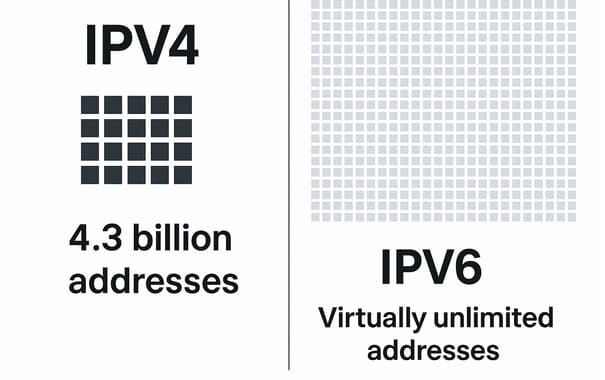
It consists of four numbers separated by dots, each ranging from 0 to 255. This structure allows for about 4.3 billion unique addresses.
At the time IPv4 was designed, that number seemed more than sufficient. The internet was small, academic, and experimental. No one anticipated billions of smartphones, cloud servers, and connected devices competing for addresses.
Why IPv4 Became a Limitation
As the internet expanded, IPv4 addresses began to run out. By the early 2010s, the global pool was effectively exhausted.
To delay the problem, technologies like Network Address Translation (NAT) were introduced. NAT allows many devices to share a single public IP address. While effective, it adds complexity and breaks the original end-to-end design of the internet.
IPv4 still works, but it survives through workarounds rather than clean architecture.
What Is IPv6?
IPv6, or Internet Protocol version 6, was designed specifically to solve IPv4’s limitations.
An IPv6 address looks like this:
2001:0db8:85a3:0000:0000:8a2e:0370:7334
It uses hexadecimal numbers and colons and is much longer than IPv4. That length exists for one reason: scale.
IPv6 provides an almost unlimited number of addresses. In practical terms, address exhaustion is no longer a concern.
IPv6 was created not just as a bigger version of IPv4, but as a protocol designed for modern networking. It assumes massive device counts, automated configuration, and long-term growth.
Core Differences Between IPv4 and IPv6
Address Capacity
This is the most fundamental difference. IPv4 has a fixed and limited address space. IPv6 removes that limitation entirely.
With IPv6, every device can have its own globally unique address without sharing or translation. This changes how networks are designed and managed.
Address Format and Readability
IPv4 addresses are short and easy to recognize. IPv6 addresses are longer and less human-friendly, but that matters less in practice.
Most modern systems rely on DNS, automation, and software tools rather than manual address entry. The complexity is handled by machines, not people.
NAT and Network Design
IPv4 depends heavily on NAT. IPv6 does not require it.
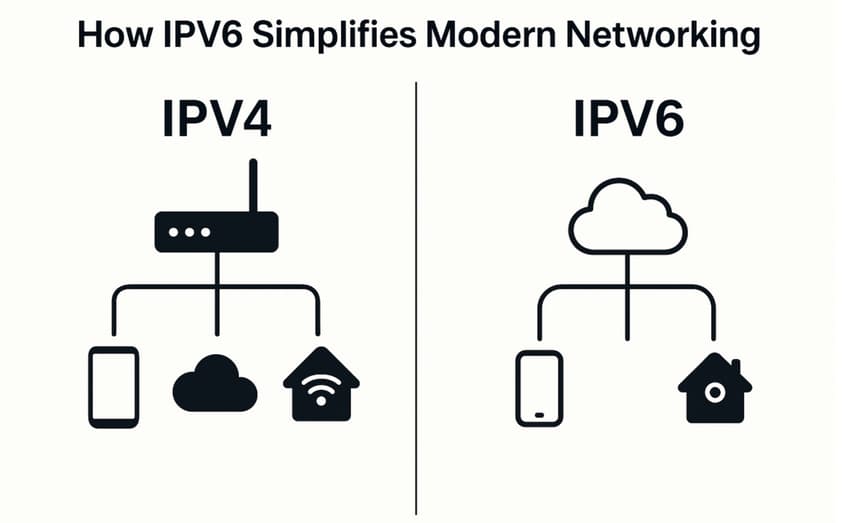
Removing NAT simplifies:
- Peer-to-peer connections
- Real-time communication applications
- Network troubleshooting and monitoring
This is especially relevant for gaming, VoIP, video conferencing, and IoT environments where direct connectivity matters.
Configuration and Automation
IPv6 was designed with large-scale automation in mind. Devices can configure themselves using Stateless Address Autoconfiguration (SLAAC), often without manual intervention.
IPv4 networks can be automated too, but they rely more on centralized services like DHCP and careful address planning. IPv6 reduces that overhead, particularly in large or dynamic environments.
Security Considerations
IPv6 was built with modern security assumptions. Support for IPsec is part of the protocol specification, and the absence of NAT makes end-to-end encryption more straightforward.
That said, IPv6 is not automatically secure. Poor configuration can still expose systems. The difference is that IPv6 removes structural obstacles that made secure design harder in IPv4-centric networks.
Why IPv6 Matters Today
IPv6 is often described as “the future,” but in reality, it’s already in active use.
IPv4 Is Becoming a Bottleneck
IPv4 addresses are now scarce assets. Internet providers buy, sell, and reuse them aggressively. This increases costs and adds operational complexity.
Large-scale NAT introduces latency, connection limits, and debugging challenges. As traffic grows, these issues become harder to ignore.
IPv6 avoids these problems rather than masking them.
Mobile and ISP Networks Already Rely on IPv6
Many mobile networks use IPv6 as their primary protocol, with IPv4 running through translation layers in the background.
If an application or service behaves poorly over IPv6, users may already be experiencing issues without realizing why. Supporting IPv6 is no longer optional for mobile-friendly infrastructure.
Cloud and IoT Growth Depends on IPv6
Modern infrastructure scales differently than traditional networks. Cloud platforms, containers, and IoT deployments benefit from having vast numbers of unique addresses.
IPv6 enables:
- Cleaner service discovery
- Simpler network segmentation
- Better visibility at scale
These advantages become more important as systems grow larger and more distributed.
Performance and Routing Efficiency
In many environments, IPv6 traffic takes more direct routes and avoids translation overhead. This doesn’t guarantee faster speeds, but it removes common friction points found in IPv4-heavy setups.
Over time, as IPv6 adoption increases, performance consistency becomes another reason to support it properly.
Why IPv4 Is Still Around
Despite its limitations, IPv4 is deeply entrenched. Legacy hardware, outdated software, and incomplete IPv6 support keep it alive.
Most networks operate in dual-stack mode, running IPv4 and IPv6 side by side. This coexistence will likely continue for years, if not decades.
IPv4 isn’t disappearing overnight. But it’s no longer the protocol shaping the future.
Final Thoughts
IPv4 built the internet we know today, but it was never designed for the scale and complexity of modern connectivity. IPv6 addresses those limits directly instead of working around them.
The transition is gradual and often invisible, but it’s happening everywhere – in mobile networks, cloud platforms, and new infrastructure.
IPv4 keeps the internet running.
IPv6 keeps it growing.
Understanding the difference is no longer optional. It’s part of operating in today’s internet, not tomorrow’s.